Since 2022, the College of Natural and Mathematical Sciences (CNMS) has been introducing a wide range of scientific topics to the college and university by hosting the CNMS Alumni Speaker Series, where distinguished alumni share their experiences and expertise with students and faculty for education and enrichment.
Upcoming CNMS Alumni Speaker Series
“Cell Surface to Nuclear Trafficking of CD55 Induces Chemoresistance and Stem-Like Properties Via PRC2 in Ovarian Cancer”.
Presented by Ofer Reizes ’97, Biological Sciences
Laura J. Fogarty Endowed Chair in Uterine Cancer Research at the Cleveland Clinic Research Institute
Resistance to platinum-based chemotherapy is the primary cause of poor survival in ovarian cancer patients. The Reize group’s research has found that the protein CD55, typically known for protecting cells on their surface, can travel to the nucleus in ovarian cancer cells to promote this resistance. This nuclear CD55 binds to and suppresses a tumor suppressor protein, leading to increased cancer cell growth and stem cell-like properties. Furthermore, CD55 can be secreted in extracellular vesicles, allowing it to spread this chemoresistance to other cancer cells, making it a promising new therapeutic target for treating resistant ovarian cancer.
March 4, 2026, noon – 1 p.m.
Biological Sciences Building, Room 004
Reizes website:
https://www.lerner.ccf.org/cardiovascular-metabolic/reizes/
“Illuminating Compartmentalized Metabolic Regulation in Single Cells”
Presented 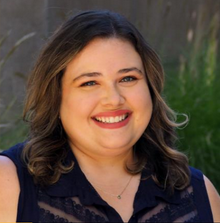 by Danielle Schmitt, Ph.D. ’17, Chemistry
Assistant Professor, Department of Chemistry and Biochemistry, University of California Los Angeles
The Schmitt Lab is interested in understanding how metabolism is spatiotemporally regulated within the cell at distinct subcellular locations, and how this regulation is perturbed in diseases with metabolic implications, like cancer. We develop genetically encoded tools to measure and manipulate metabolism and cell function to (1) understand how the signaling networks regulating metabolism are spatiotemporally localized and the downstream effects of localized activity; and (2) to study compartmentalized metabolic flux in health and disease. In this talk I will describe ongoing efforts within the lab to study metabolic signaling networks and develop new microscopy-based tools for imaging metabolic regulation with high spatiotemporal resolution.
March 6, 2026, noon – 1 p.m.
Meyerhoff Chemistry Building, Room 120
“Advancing Rabies Antiviral Research: A Multi-Platform Screening and Optimization Approach Utilizing 3D-Neural Models”
 Presented by Dan Talley, Ph.D. ’15, Chemistry
Medicinal Chemist, National Center for Advancing Translational Sciences (NCATS)
Rabies virus (RABV) infection is preventable via prophylactic vaccination and curable only if treated quickly, with a combination of human Rabies immunoglobulin (HRIG) and multiple doses of vaccine. A new potent small molecule inhibitor was discovered, with strong antiviral activity and low cytotoxicity in two human-derived, 3D-organoid and tissue models, which mimic CNS-relevant viral infection, supporting its utility as a promising lead for further in vivo therapeutic testing and development.
March 27, 2026, noon – 1 p.m.
Meyerhoff Chemistry Building, Room 120
Administrative Information to Host Event